Choosing an SEO agency is not really about finding the company with the loudest promise. It is about finding a partner that can make your website easier to find, easier to trust and more likely to bring in the right enquiries. That means looking past glossy reports, vague packages and the familiar temptation to pick the cheapest monthly figure.
A good agency should be able to explain what it would improve, why that work matters to your business and how you will see the progress. You do not need to become an SEO expert to make a sound choice. You do need a way to tell clear, useful work apart from noise dressed up in a dashboard.
Google's own guidance says that hiring an SEO can be useful, but it also recommends understanding enough of the work to spot advice that is not recommended. That is the right starting point: know the questions worth asking, then choose the provider that gives the clearest, most commercially useful answers. Google's guide to hiring an SEO
1. Start with the business result you need
Before you compare agencies, get specific about the job. “We need more traffic” is not quite enough. More traffic from where? For which service? From customers in what area? And what should they do once they arrive: enquire, book, buy, visit, call or request a quote?
A small local business might need more qualified visits to a service page and a better Google Business Profile. A business with a tired website may need clearer pages, stronger proof and a better enquiry route before it needs more visitors. An established company might need help protecting useful old pages during a redesign. These are different jobs, so they should not all receive the same boilerplate package.
Write down the services that matter most, the locations you serve, the type of customer you want more of and the business action you need the website to earn. Take that short brief to every agency conversation. It gives you a fair way to compare their thinking. The useful provider will ask sensible follow-up questions. The less useful one will leap straight to “we can get you number one”.
This is also why an initial SEO audit can be valuable. It establishes what is actually holding the website back before someone sells you a fixed list of tasks. An audit is not the end goal, but it is a better starting point than guessing.

2. Know what useful SEO work looks like
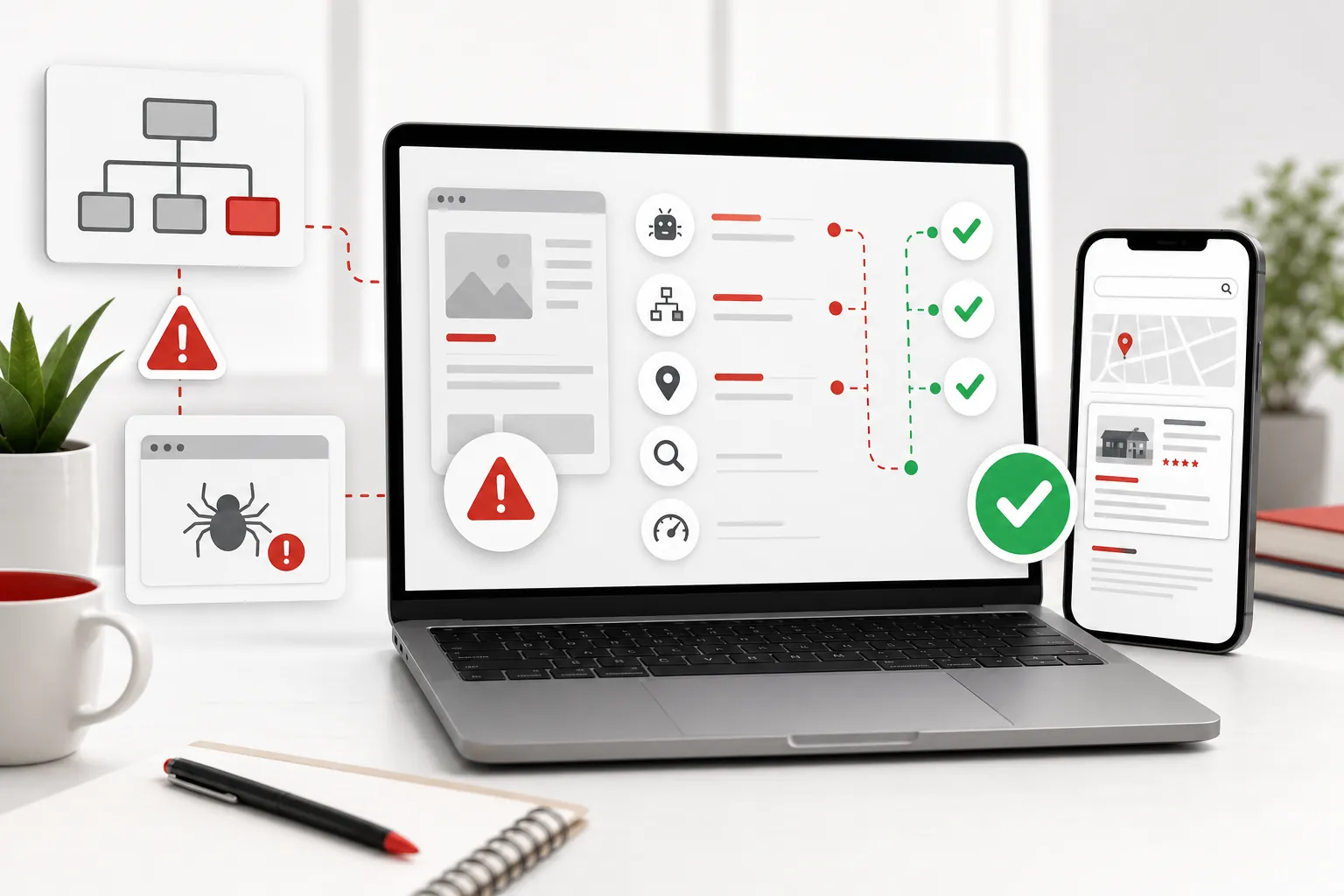
You do not need a technical checklist with 200 lines on it. You should, however, expect the agency to look at the parts of the website that affect whether people can find, understand and act on the business. That usually includes technical health, important service pages, useful supporting content, internal links, local signals where relevant and the way the site turns visits into enquiries.
Google describes SEO as helping search engines understand your content while helping people decide whether to visit. That means the work should not stop at chasing a phrase in a title tag. It should make the page clearer to a real customer too: stronger page structure, more useful answers, credible proof, a clear service offer and an obvious next step. Google's SEO starter guide is useful background because it covers the foundation a good provider should understand.
Ask each agency to explain its work in categories you can recognise. For example: “What needs fixing on the site?”, “Which pages would you improve first?”, “What content would you create and where would it lead?”, “Who is making the changes?”, and “How will you decide the next priority?” Clear answers are not a luxury. They are how you avoid paying for activity that never reaches the website.
The right mix changes by business. A new site may need basic discovery and service-page work. A site with good pages but weak structure may need technical SEO help. A site that earns visits but few enquiries may need conversion improvements. A good agency diagnoses first instead of pretending every business needs the same hammer.
3. Ask for a first-90-days plan, not a magic promise
The best question is simple: “What would you do in the first 90 days, and why?” You are not looking for a perfect forecast. No provider can promise exactly when Google will change its mind. You are looking for a sensible order of work and a clear explanation of what the agency will actually do.
A credible first phase often starts by understanding the business, checking what the site already has, reviewing search and visitor signals, finding technical blockers and choosing a short list of high-value pages. The early work may include fixing broken paths, improving the main service pages, checking local information, strengthening proof, mapping useful content and deciding where new guides can support the buying journey.
Be cautious if the whole first month is a generic report or a pile of broad blog posts. Articles can be useful, but they should support a real route into service, proof, pricing or an audit. Publishing content while the main service pages are vague is like adding signposts to a shop with no door.
The plan should also show how recommendations become changes. Some agencies advise; some implement; some do a little of both. Neither model is automatically wrong, but the difference matters. If you are expected to find a developer, rewrite every page and chase every update yourself, that needs to be obvious before you sign.
4. Look for relevant evidence, not theatre
Case studies, testimonials and examples can be useful, but they need context. Ask whether the business was similar in size, market or starting point. Ask what work was done, how long it took and what changed beyond a single flattering chart. A big ecommerce win does not automatically prove the agency understands a local service business trying to earn more qualified enquiries.
Look for evidence that the agency can improve the kinds of pages your customers use. Can it explain how it handles a weak service page, a recently redesigned website, poor local visibility, an unhelpful enquiry route or a site with no useful content? The point is not to demand a copy of another client's plan. The point is to see whether the provider understands the real-world work behind the promise.
Also look at how the agency explains its own website. Is the offer clear? Are there useful guides that answer buyer questions? Can you find its services, proof, pricing clues and contact route without playing website detective? This is not a perfect test, but it is fair to expect an SEO provider's own customer journey to make basic sense.
Be wary of evidence that is all logos, awards and ranking screenshots. Those things can be real, but they do not explain whether the provider will improve your website. The strongest proof is usually a clear story: the starting problem, the work completed, the result, the timescale and what happened next.

5. Check who will do the work and how you will work together
The person who sells the service may not be the person improving your website. That is normal, but you should know who owns the relationship, who carries out the work and how questions get answered. Ask whether you will have one contact, how often you will hear from them and whether they can explain decisions without turning every conversation into a jargon contest.
Good communication is practical. You should be able to see what changed, why it was chosen and what is next. The best reporting is not necessarily the prettiest dashboard. It is the report that helps you understand whether the website is becoming more useful to the business.
This matters especially when the work touches copy, images, service pages, reviews, local details or customer journeys. A provider can have excellent technical knowledge and still struggle if it does not understand the offer or cannot get a decision from the owner. Pick an agency that gives you a manageable role: you supply business knowledge and approvals; it turns that into consistent website improvement.
6. Compare scope and price together
SEO prices are not directly comparable until you understand the work behind them. A cheaper package may be fine when the website is simple and the provider can make useful changes. It is poor value when it buys a monthly report and a few generic recommendations that sit untouched. A higher price may be justified when it includes meaningful implementation, stronger content, technical fixes, careful local work and regular improvement to the pages closest to revenue.
Compare each proposal against the same headings: discovery, technical checks, page improvements, content, local work, links, implementation, reporting, meetings, approvals and support. Ask what is included, what is outside scope and what happens if the work needs a developer, designer or copywriter. You are buying a result-oriented service, not a mysterious monthly bundle.
It is also worth asking how the work connects to the website as a whole. Search visibility and conversion are not separate planets. Better rankings will not rescue unclear pages, while a lovely page will not help much if nobody can find it. The strongest providers can explain how website structure, proof, content and conversion work together. 118's website optimisation service is built around that wider job rather than treating search as a bag of isolated tricks.
Read the contract before you get emotionally attached to the pitch. Check the minimum term, notice period, cancellation process, ownership of content and accounts, reporting expectations and whether there are extra charges for making website changes. A contract should make the relationship clearer, not make escape feel expensive.
7. Agree how progress will be measured
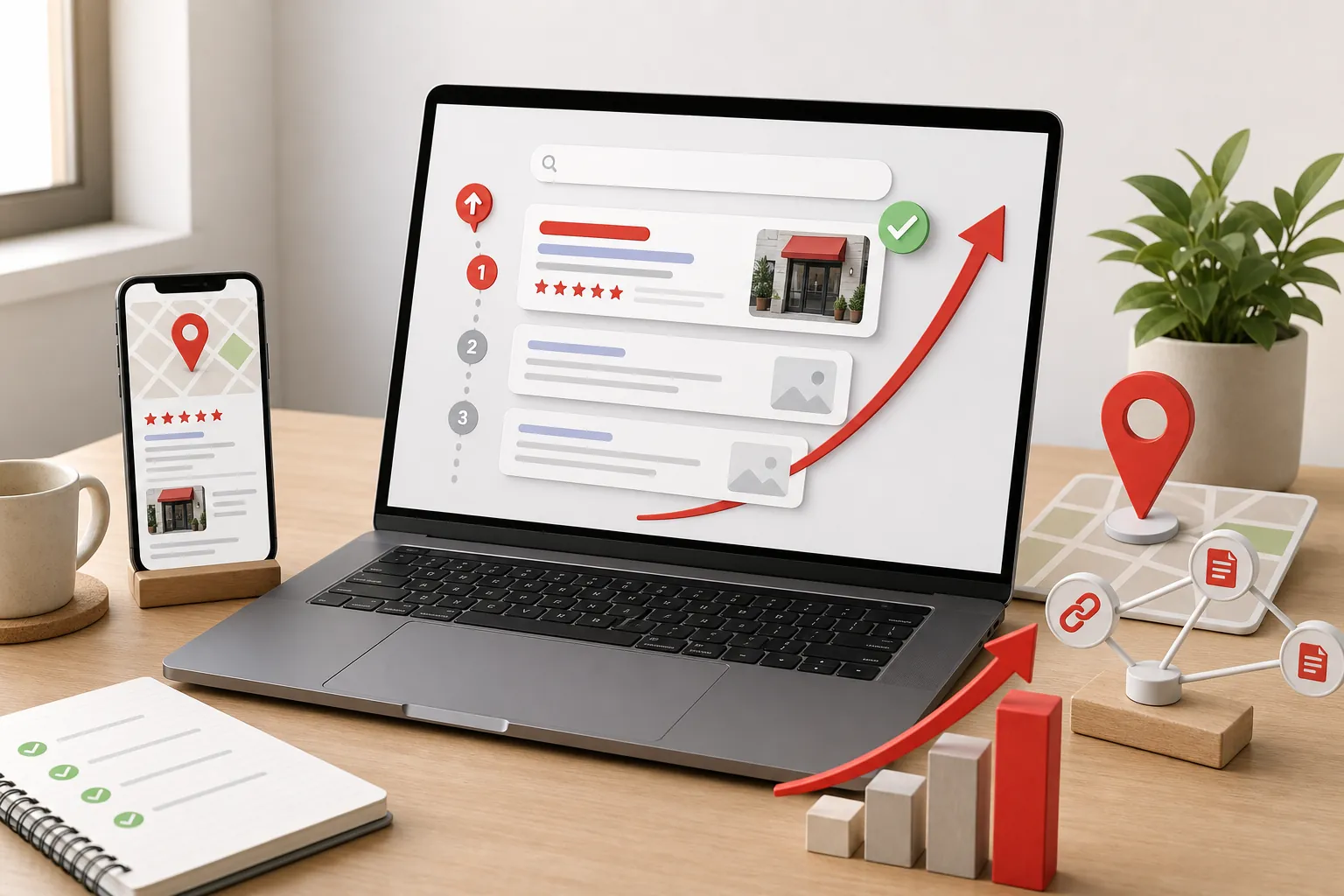
A good SEO agency should talk about more than rankings. Rankings matter because they can lead to clicks, but a ranking on its own does not pay an invoice. The real question is whether the work is helping more suitable people find the right page and take a useful next step. That is why reporting should connect search visibility to the health of the website and, where possible, to enquiries, calls, bookings or sales.
Early on, the useful measures may be modest: important pages being discovered, more relevant search impressions, better click-through from a clearer title, technical errors being removed, a service page becoming easier to understand, or an enquiry route being fixed. A provider should be able to explain which signals are leading indicators and which business results will take longer to earn.
Ask which pages will be watched, which search themes matter, how enquiries are tracked and what would trigger a change of plan. The answer should be tailored to the business. A plumber that wants calls in a defined area will measure progress differently from a national consultant that needs qualified form enquiries, and both will differ from an online shop.
The reporting rhythm matters too. Monthly is common, but a report should not become a monthly ceremony where everyone admires the graph and nobody changes the website. The useful cycle is review, prioritise, implement, check and repeat. If a page earns impressions but no clicks, the agency should have a view on why. If visitors arrive but do not enquire, it should look at the page, proof and next step, not simply ask for another month of patience.
It is reasonable for SEO to take time. It is not reasonable for the work to be invisible. You should be able to point to the pages that changed, understand the reason for the change and see what is planned next. That gives you a far better basis for judging value than a report full of unfamiliar abbreviations.
8. Compare agencies using the same brief
Once you have a clear business goal, create a short brief and give it to every provider you are seriously considering. Keep it simple: what the business does, who it wants to reach, the services that matter most, the locations served, the current website, what is not working and what a good outcome would look like. You do not need a perfect marketing document. You need enough context for each agency to respond to the same problem.
Then ask the same core questions. What would you prioritise in the first 90 days? Which pages would you improve first? What work is included in the monthly fee? Who changes the website? How do you use search and visitor data to choose the next priority? What evidence can you show for similar work? How will reporting connect the work to the outcome? What are the contract and cancellation terms?
Comparing the same answers side by side makes the decision much easier. One provider may be cheaper because it is advisory only. Another may include hands-on page work. A third may be strong technically but weak on content and conversion. Those are useful differences when they are explicit. They are expensive surprises when you discover them six months in.
Do not overdo the shortlist. Three serious conversations are usually more useful than ten quick quotes. You are looking for a provider that understands the commercial problem, can explain its approach and gives you confidence that decisions will not vanish into a black-box process. Chemistry matters too, but only after the basics pass. A friendly sales call is not a substitute for a sensible plan.
9. Give the agency the information it needs
A good agency cannot invent the business knowledge that makes your pages convincing. It can shape that knowledge, organise it and turn it into clearer website content, but it still needs the facts only you can provide: the services you want to sell more of, the questions customers ask before buying, the locations you serve, the jobs you do not want, the proof you are allowed to share and the difference between a casual enquiry and a genuinely good lead.
Be ready to give access to the parts of the website and measurement that the provider needs to understand the current position. That may include the website platform, search reporting, analytics, business profile, call or form information, past marketing work and any current agency arrangements. You should understand what access is being requested and retain ownership of your important accounts, but a provider cannot make informed decisions while looking through a keyhole.
Agree a simple approval process too. Website improvement slows down when every change waits three weeks for an answer, but it also goes wrong when pages are changed without the owner's commercial knowledge. Decide who can approve copy, offers, pricing, images, technical changes and new pages. The best arrangement gives the agency enough room to keep moving while keeping the owner in control of claims, customer promises and brand decisions.
This is not extra admin for the sake of it. It is how the work becomes more specific over time. The more the provider understands about the enquiries you value, the better it can choose the pages, questions and improvements that deserve attention.
10. Choose the support model that fits your business
Not every business needs the same kind of SEO provider. A specialist consultant can be a strong fit when you have an internal team ready to implement recommendations. A larger agency can make sense for a complex business with several markets, products or stakeholders. A managed website service can suit an owner who wants the website and ongoing improvement handled together rather than coordinating separate specialists.
The deciding factor is not the label. It is the gap between what needs doing and who can reliably do it. If you have someone who can update pages, write expert material, approve changes quickly and follow a plan, advisory support may be enough. If the same person is also serving customers, running the business and trying to remember the website password, a more hands-on model is often better value.
Think about the work after the first wins too. Websites change. Services evolve. New customer questions appear. Useful pages need improving, links need checking, proof needs updating and opportunities emerge from real search data. The right relationship is one that can keep moving once the easy audit fixes are out of the way.
This is where managed SEO services can be different from a report-only retainer. The useful question is not “Do I need an agency or a package?” It is “Who will keep doing the work that makes this website more useful to customers?” Answer that honestly and the right support model becomes much easier to see.
11. Watch for these red flags
Guaranteed top rankings are the obvious warning sign. Google does not sell organic ranking positions, and it does not guarantee that a page will be crawled, indexed or shown even when it follows the basics. Any provider promising certainty is either overselling or quietly defining success around a very easy phrase. Google's explanation of how Search works is clear on this point.
Mystery methods are another problem. You do not need every technical detail, but an agency should be able to describe the type of work it is doing and why. “Our proprietary system” is not an answer if it leaves you unable to tell whether the work is sensible, risky or happening at all.
Be sceptical of providers that focus entirely on traffic, rankings or the number of words published. Those can be useful signals, but they are not the business outcome. For a small business, better enquiries, more suitable customers and a website that is easier to trust are often more valuable than a graph that looks busy.
Finally, avoid pressure. A good agency can explain its value, its limits and the next sensible step. It does not need to frighten you into a long contract before it has even looked properly at the website.
Use this practical checklist
- Write down the business outcome you need before you contact agencies.
- Ask what they would improve first and why that work comes first.
- Check relevant evidence, not just a list of impressive client logos.
- Confirm who writes, changes and checks the work on your website.
- Compare scope, communication, reporting and contract terms alongside price.
- Walk away from guaranteed rankings, mystery methods and vague monthly activity.
How 118 118 Sites helps
118 118 Sites is designed for owners who do not want a website, an audit and an SEO plan that each live in separate boxes. The work is connected: make the site clearer, fix the parts that stop it being found, add useful pages, strengthen the route to an enquiry and keep improving with real signals.
That means the conversation can start with a free site audit, then move into the level of help that fits the business: managed SEO services, SEO packages for small business, how it works, proof and pricing. The aim is not to impress you with activity. It is to keep removing the reasons good customers do not find, trust or contact the business.
Frequently asked questions
How do I choose a good SEO agency?
Choose an agency that starts by understanding your business, customers and important pages, then explains the work it would do in plain English. Look for relevant evidence, clear ownership of implementation, realistic expectations and reporting that connects activity to useful business outcomes rather than a pile of vanity metrics.
What questions should I ask an SEO agency?
Ask what they would prioritise in the first 90 days, what they would change on the website, who will do the work, how they choose priorities, what is included in the fee, what is outside scope, how they report progress and what happens if the partnership ends. A credible provider should answer clearly without hiding behind jargon.
How much should I pay an SEO agency in the UK?
The right budget depends on the website, competition, number of services and locations, and whether the provider is advising or doing the implementation. Compare the scope, the quality of the work and the business value it could create rather than choosing purely by the lowest monthly number.
Should I sign a long SEO contract?
A longer agreement can make sense because useful search improvement takes time, but the terms should be clear. You should know what is being delivered, how progress will be reviewed, what notice period applies and whether you can see the work happening on the website. Commitment without clarity is not a strategy.